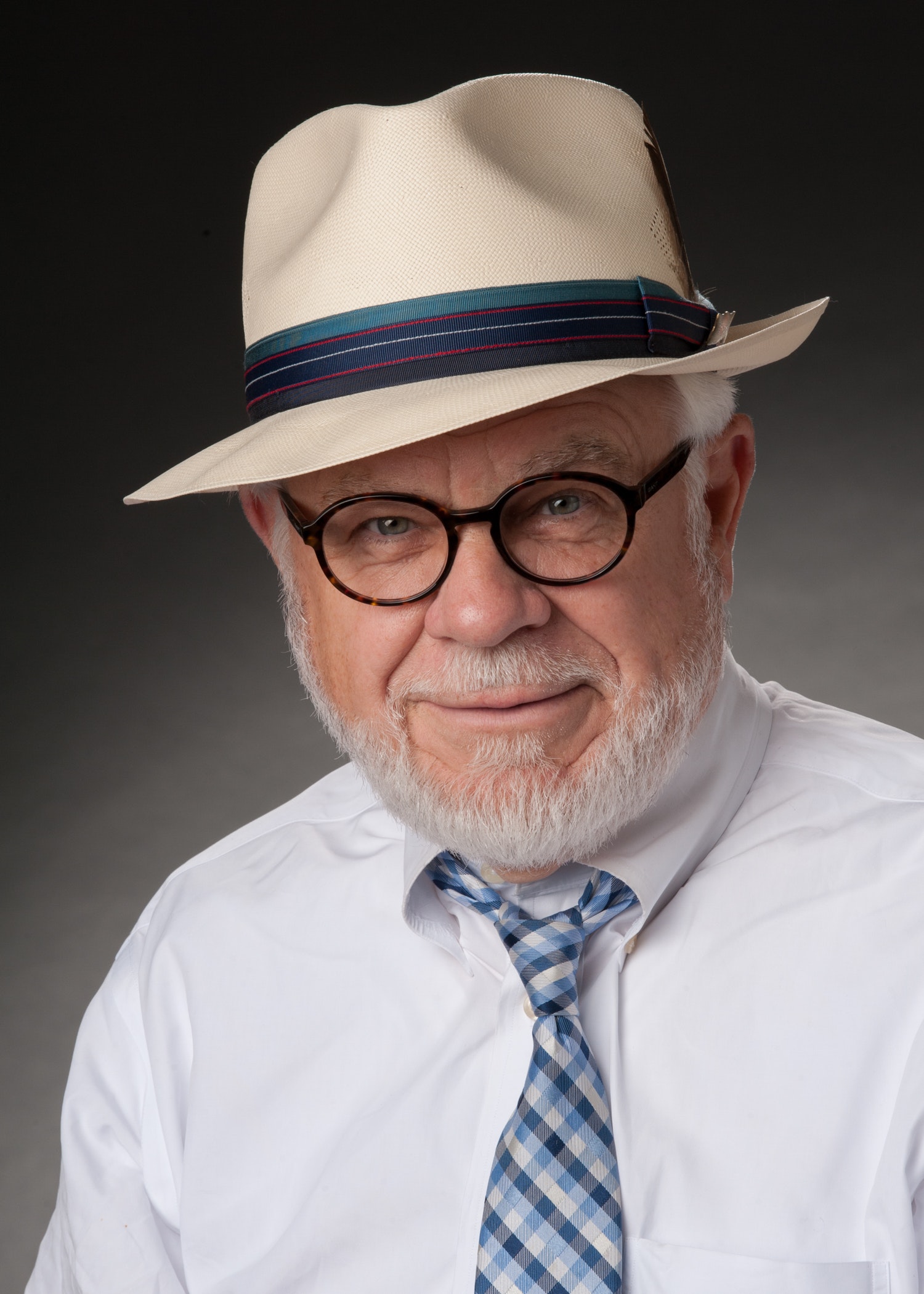
William B. ‘Bill’ Wiener, Jr., AIA
1936-2026
On April 30 we lost a special Native Son of Shreveport: William B. “Bill” Wiener, Jr. - 1936-2026: Architect, Sculptor, Author, Inventor, Preservationist, Environmentalist, Conservationist, Philanthropist, World Traveler, Photographer, Defender of the Civic Realm of Shreveport, Tireless Advocate for Good Design, Good Government, Civil Rights, Human Rights, and so much more.
Born in Shreveport to William B. Wiener, Sr., a prominent architect, he initially studied engineering physics at Cornell University before earning his Bachelor of Architecture degree there in 1961. From 1961-1973 he worked in his father’s firm, William B. Wiener, Morgan & O’Neal Architects, and later opened his own office, Bill Wiener, Jr., Architect-Planner.
In 1975 Bill worked with other members of the American Institute of Architects Shreveport to bring a Rural/Urban Design Assistance Team (R/UDAT) to Shreveport to write a study on the development of Downtown. The report guided subsequent Master Plans, propelling the first preservation efforts in the historic core.
He published material on underwater archaeology, surveying, drafting, excavations and ocean floor archaeology for National Geographic and The Shreveport Times.
His talent as a skillful designer in the modern idiom can be seen in local buildings including Northwood High School, Shreveport Regional Airport, Commercial National Bank Hearne Avenue South Branch, Commercial National Motor Bank Downtown, Texas Forestry Association Office, Roper House, Weiss House, Veterans Park, and the Bicentennial Memorial Pool on the riverfront.
Bill’s tenacious preservation efforts saved several city landmarks, forging a path for their renovation and reuse.
These include the Line Avenue School (c. 1904), Old US Post Office (1910), and the original Galilee Baptist Church (c. 1877) were Martin Luther King, Jr. spoke twice.
Famously, Bill Jr. tied himself to a central support column of the church to fend off the City’s demolition crew which anxiously stood by. The recently restored building will soon be the site of the new Northwest Louisiana Civil Rights Museum, which he supported.
Together with architect Kim Mitchell, Bill designed the masterplan, visual identify program, and pavilions for the inaugural Red River Revel in 1976, winning a Design Honor Award from the Louisiana Architects Association.
Bill was also a noted sculptor, crafting complex geometric works in metal, informed by his training in both physics and architecture. A recent exhibit at The Meadows of Museum of Art at Centenary College featured his large-scale sculptural works and architecture.
He recently was honored by American Institute of Architects Shreveport with a Lifetime Achievement Award for his inspiring work as an architect, his active support of historic preservation, his commitment to environmental causes, and for his civic engagement throughout his career.
Bill, thank you for all you did!
You will be forever missed, but leave a tremendous legacy for us to cherish and emulate.
Your friend, Christopher W. Coe, FAIA
John came to Shreveport in January of 1977 when he was transferred to Barksdale AFB.
He’s been active in Shreveport politics since deciding to make Shreveport his home.
John practiced law for 40 years and he now monitors local politics. He regularly attends Shreveport City Council and Caddo Parish Commission meetings.
John is published weekly in The Inquisitor, bi-monthly in The Forum News, and frequently in the Shreveport Times.
He enjoys addressing civic groups on local government issues and elections.