
By PATRICK WALL | Staff writer
Joey Richard likes to say that he conducts research from behind his barber chair.
It’s where Richard, the owner of Holliwood Cutz barber shop in Opelousas, deduced that the local school system is shrinking.
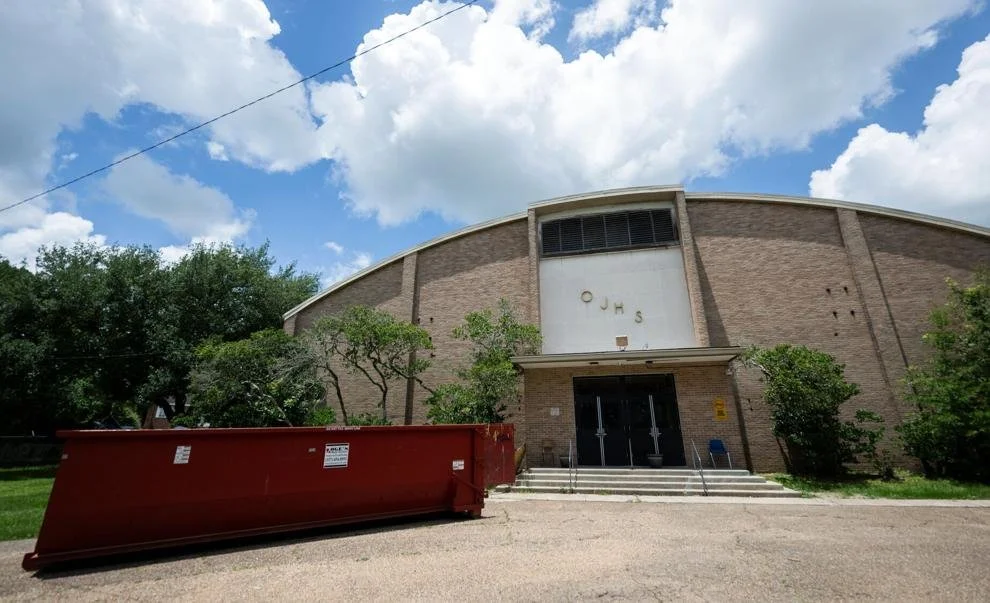
A large metal container is pictured outside the Opelousas Junior High School gym Monday, June 1, 2026, in Opelousas, La.
STAFF PHOTO BY LESLIE WESTBROOK
“Every year I've been in business,” he said, “I'm cutting less and less kids.”
Like nearly every other school district in Louisiana, St. Landry Parish has seen enrollment fall as families have fewer kids, move away or opt for charters or homeschool. Yet even as the school system lost roughly a quarter of its students over the past decade, its workforce grew by nearly 20%.
School officials say the positions are necessary to serve the area’s many students with complex needs — but it's not clear the district can afford them.
Richard, who has two school-aged children and whose wife is a classroom aide, watched with dismay last month as local voters rejected a tax hike that would have boosted school employees’ low pay, leading frustrated bus drivers — who earn less than $25,000 annually — to stage a sickout. When Richard attended the May school board meeting a few days after the vote, an official in the finance department said he would cut some positions and reduce his own salary to chip away at the district’s nearly $8 million deficit.
To Richard, the right answer is both obvious and agonizing: The district needs fewer schools and workers.

Joey Richard and his son Dylan, 12, chat as they walk and roll down to their neighborhood mailboxes Monday, June 1, 2026, in Sunset, La. Dylan will enter 6th grade this fall at Helix AI and Medical Academy.
STAFF PHOTO BY LESLIE WESTBROOK
“I'm not the superintendent,” he said, “but I'm sure that he's going to have to cut the fat off the chicken.”
Nationwide, schools have been staffing up for years, even as they enroll fewer students. The pandemic turbocharged the trend as schools used federal relief funds to hire counselors, tutors and other staffers to help students overcome COVID-related learning setbacks, even as many families pulled their kids out of public school.
In Louisiana, the school workforce grew by 6% over the past decade while enrollment fell by 7%, according to federal data from 2014 to 2024. Post-pandemic, the state’s public schools lost nearly 44,000 students, yet added more than 11,000 staffers — mainly teachers, but also classroom aides and administrators, according to 2019 to 2024 figures.
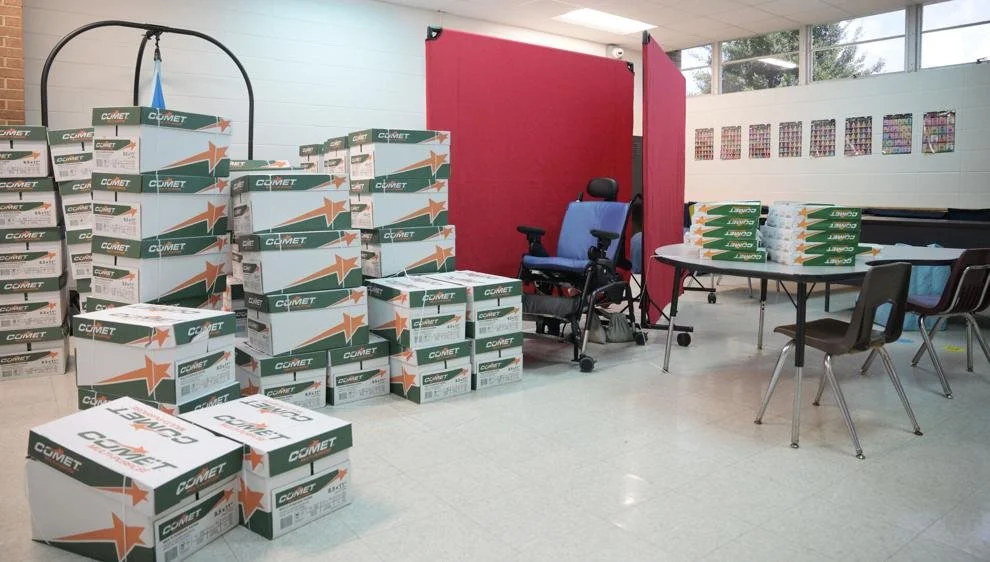
Another former classroom at University Elementary School now is used for storage.
By JILL PICKETT | Staff photographer
Part of the statewide staffing increase is due to public charter schools, which expanded rapidly over the past decade to meet surging demand. But about 40% of traditional public school districts had larger workforces in 2024 than a decade earlier, even though their student counts were smaller, the federal data show.
District leaders say they used extra staff to respond to students’ soaring academic and mental health needs, especially after COVID, as well as state priorities like the push to expand career education. The additional educators have led to lower class sizes, a priority for many teachers and parents, and likely contributed to Louisiana students’ remarkable rebound from pandemic learning loss and recent reading gains.
State leaders could embrace the enrollment declines as an opportunity to boost Louisiana’s per-student spending, which is higher than most Southern states yet below the national average. But when the state education board sought to give school districts some of the $42 million the state saved this year in education funding, which is tied to enrollment, lawmakers rejected the idea.
Instead, Gov. Jeff Landry last week proposed slashing nearly $170 million in state funding for schools, saying the money should instead pay for teacher stipends that the Legislature left out of the state budget. Despite the rising cost of insurance and utilities, Landry argued that school districts can afford the cut by reducing “the waste and the bureaucracy.”
The number of people “that school boards are employing, non-instructional, has risen at the detriment of our teachers,” he said, calling for greater “fiscal discipline.”
Now, with federal COVID money long gone and state funding uncertain, shrinking districts that have tried to stave off school closures and layoffs might soon have no other option.
“We just have to continue to get our staff to align with our student numbers,” said St. Landry Parish Schools Superintendent Milton Batiste III. “As long as we can do that, we can survive.”
Why staffing surged while enrollment fell
NO.teacherpay.060326.03.JPG
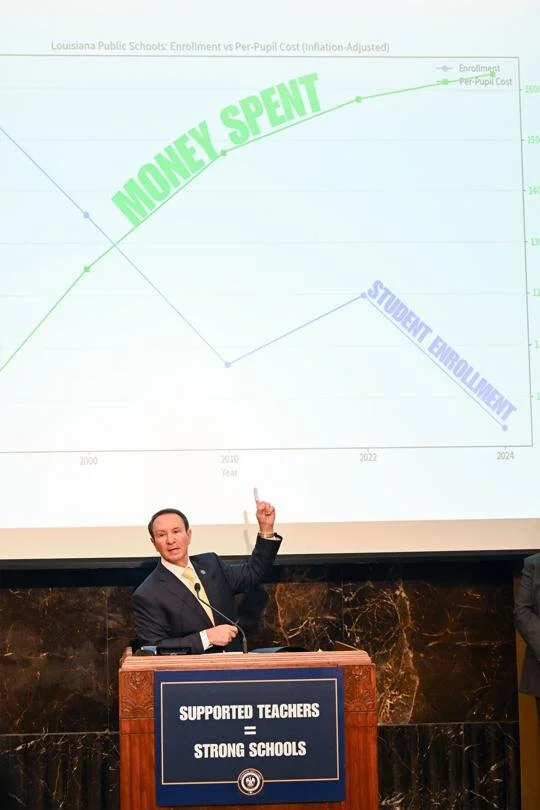
Gov. Jeff Landry points to the graph displayed above him regarding the relationship between money spent and student enrollment during a press conference about teacher raises at the state capitol on Tuesday, June 2, 2026. Staff photos by Javier Gallegos
When the governor unveiled his plan to cut school budgets, he pointed to the growing gap between enrollment and spending.
“I'm going to keep hammering this until people understand,” Landry said Tuesday, standing before a giant chart with two intersecting lines. “The amount of students in the system keeps going down, and the amount of money we spend keeps going up.”
How is that possible? The explanation centers on staffing because employee salaries and benefits are by far the largest school expense.
One cost driver is the changing student population. While total enrollment has declined, groups with greater needs have grown — and those students often require additional support from staff.
Louisiana’s population of students still learning English, many of them recent immigrants, soared over 150% from 2010 to 2021, more than any other state, according to an analysis by New America, a national think tank. The share of students with disabilities grew 3 percentage points over the past decade, according to state data.
Another factor is the $4 billion in federal COVID funds that Louisiana schools received during the pandemic. Many used the money to hire staffers who helped reopen classrooms and caught up students who fell behind.
Schools also added employees to meet new state demands, which in recent years have called for enhanced tutoring, career training, revamped reading instruction and mandatory courses in computer science and financial literacy.
On the flip side, school systems can't automatically cut positions as enrollment slips because declines typically are spread across campuses. Classrooms and schools need some personnel, like principals and custodians, no matter how few students they have.
“The challenge for school districts is that their costs don't decline at the same rate as they lose students,” said Carrie Hahnel, senior associate partner at Bellwether, a national education consultancy, who has studied the impact of student loss on school budgets.
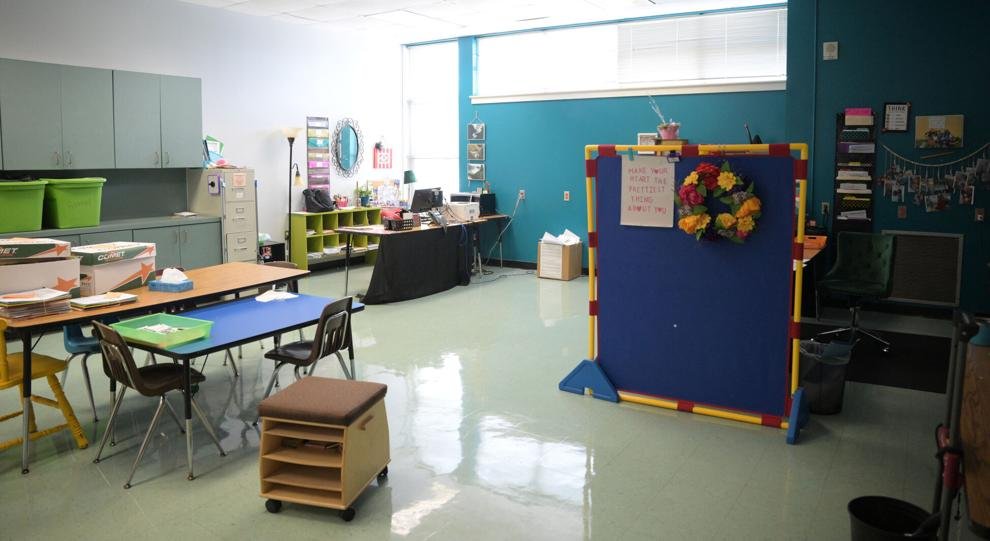
Enrollment plummeted at University Elementary School in Shreveport during the pandemic. Now a former classroom is used as office space.
By JILL PICKETT | Staff photographer
How can shrinking schools afford to add employees when state funding is based on enrollment? The main reason is that school districts get some federal aid and their local tax revenue regardless of how many students they serve. And in Louisiana, nearly half of K-12 education spending — over $5 billion — comes from local revenue.
For example, St. Tammany Parish received about $43 million more in local revenue in 2025 than it did a decade earlier, adjusted for inflation, even though it lost about 2,800 students, according to state data.
“A school district doesn't call for a referendum when they have declining enrollment to say, ‘Hey, we're going to reduce our property taxes,’” said Matthew H. Lee, an economics professor at Kennesaw State University in Georgia.
Because some funding doesn’t fall in proportion to enrollment, shrinking school districts have increased per-student spending and staffing more than growing districts, Lee and his colleague, Benjamin Scafidi, found in a study of national data from 1999 to 2019. The additional staffing might benefit some students, but it typically comes at the expense of higher salaries — including for teachers, who earn less in Louisiana than almost anywhere else.
“Adjusted for inflation, teacher salaries have been flat over a few decades,” Scafidi said, “because the money went to the staffing surge.”
Schools have been adding employees for decades, so the trend could continue, he added. But other experts see a perfect storm — sharply falling enrollment, rising operational costs and tightening budgets — that will force districts to downsize.
“I anticipate that we’re just at the front end of this,” Hahnel said. “We’re going to see much more shrinking of our school systems in the future.”
District downsizing
Caddo Parish might offer a glimpse of this future.
The school system, which includes Shreveport, shed nearly 8,500 students over the past decade. In response, officials say, they’ve taken aggressive steps to right-size the district.

Ashley Atkins is the principal of University Elementary School in Shreveport, La., seen here Tuesday, May 19, 2026.
By JILL PICKETT | Staff photographer
More than 20 schools have been shuttered since 2000, and the district had about 1,050 fewer employees in 2024 than a decade earlier. Superintendent Keith Burton said he tried to make the district less top-heavy, moving central office staffers into schools and putting principals in charge of teacher training rather than district officials.
“If a staff member can't draw a straight line between their daily work and the impact on a teacher or a student,” he said, “then we question the need for that position.”
During the pandemic, enrollment cratered at schools like University Elementary in Shreveport, which went from about 1,100 students to just over 600. Principal Ashley Atkins had to let go of teachers and clerks — for a while, she was answering the school’s main phone line — and repurposed empty classrooms as office and storage space.
While enrollment has climbed back to about 860 students, and the school improved its state rating, Atkins has had to do more with less – including fewer staffers.
“That has been the hardest thing,” she said. “When you don't have the children, you don't have the jobs.”
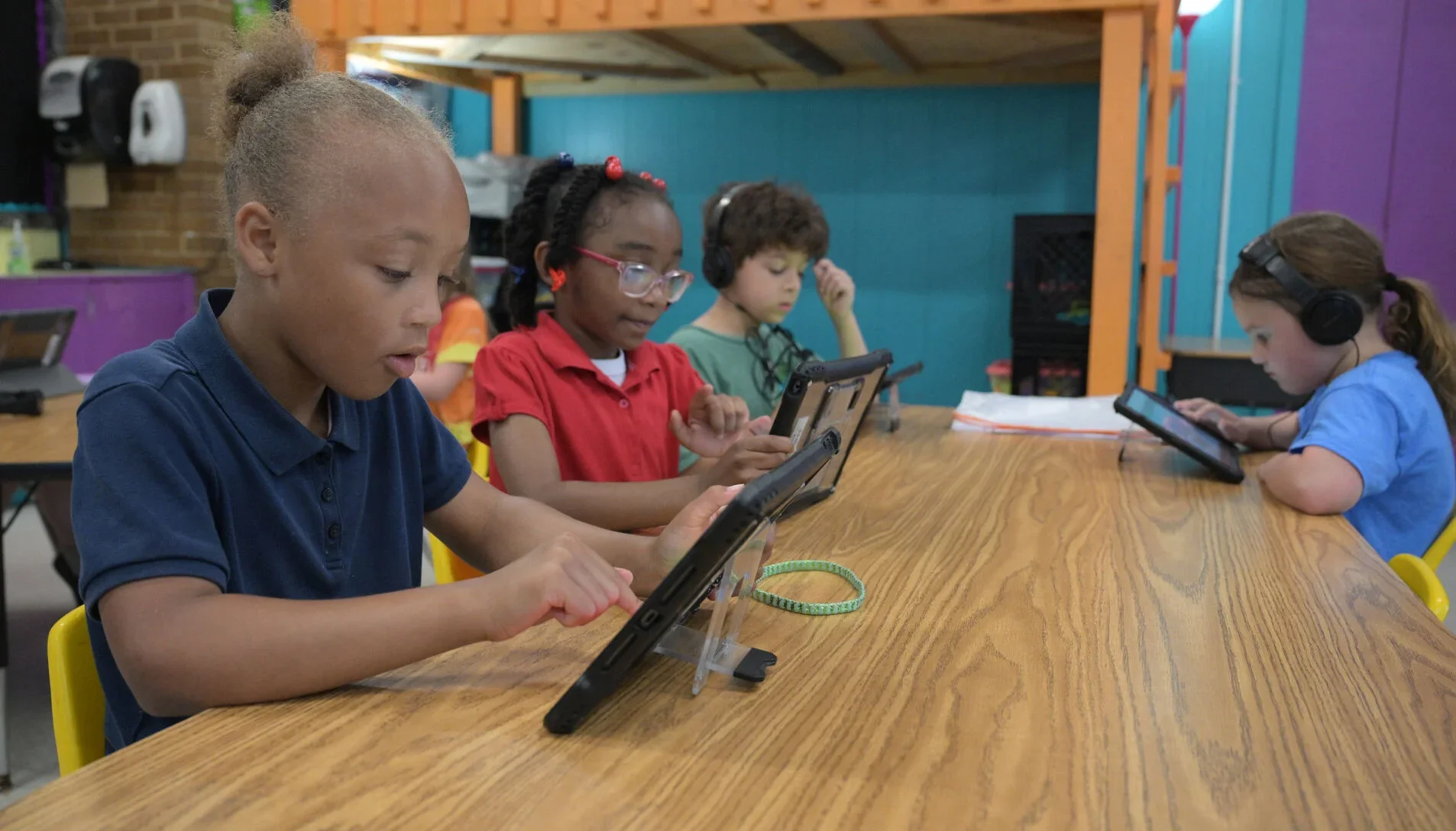
First-grade students play an educational game on tablets Tuesday, May 19, 2026, at University Elementary School in Shreveport, La
By JILL PICKETT | Staff photographer
Reckoning with enrollment loss
While some Louisiana school districts have started to right-size, others have put off the reckoning.
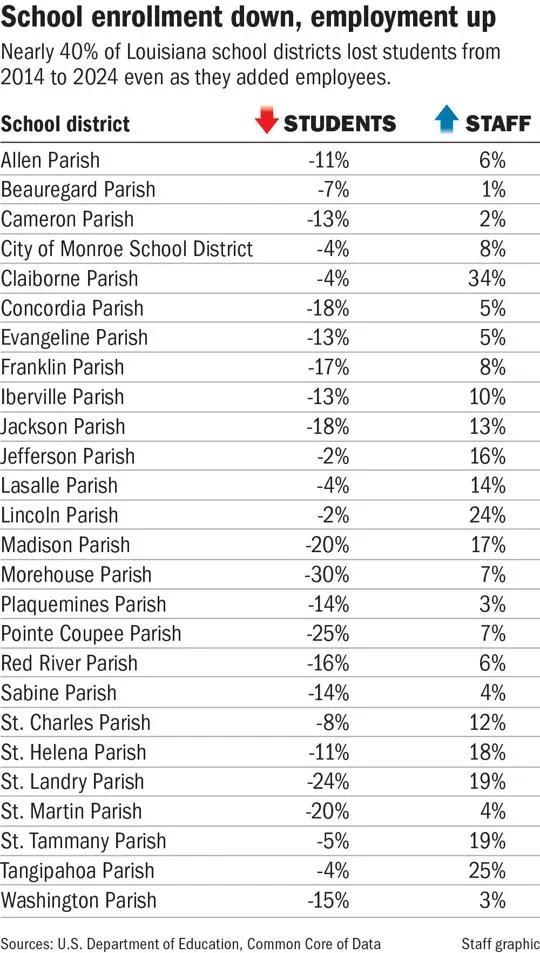
Nearly all of Louisiana’s roughly 70 traditional school districts lost students over the past decade. Meanwhile, their employment levels often see-sawed, going up one year and down the next. Most added workers during the pandemic as student needs spiked and federal aid flooded in.
But by 2024, 30 districts with declining enrollment had fewer employees than they did a decade earlier, according to an analysis of federal data. By contrast, 26 districts had fewer students, but more staffers than in 2014.
Some of the difference could stem from funding, as school systems in wealthier communities get more local tax dollars, while those serving needier students get more state and federal money. Yet staffing can differ greatly even between districts with similar funding levels, said Maggie Cicco, a research fellow at Georgetown University’s Edunomics Lab, which has highlighted the divergence of school enrollment and employment.
“How much money gets to a district is just the beginning of the conversation,” she said. “They really made very different decisions in their staffing.”
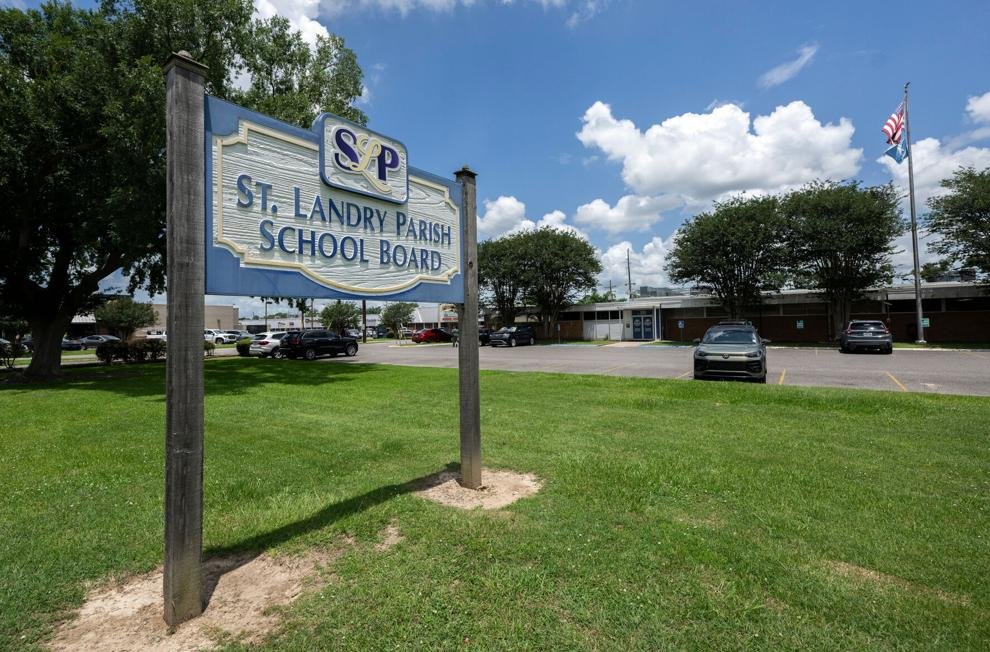
The St. Landry Parish School Board office is pictured Monday, June 1, 2026, in Opelousas, La.
STAFF PHOTO BY LESLIE WESTBROOK
St. Landry Parish in south-central Louisiana is rich in Cajun-Creole traditions — “It’s gumbo for your soul,” the tourism tagline goes — but limited in resources. The school district gets about $53 million in local revenue, compared with $330 million in St. Tammany, according to state estimates.
The St. Landry school system lost about 3,500 students during the decade that ended in 2024, according to federal data. The district’s workforce fluctuated over that period, but in 2024 it employed about 270 more people than a decade earlier, the data show.
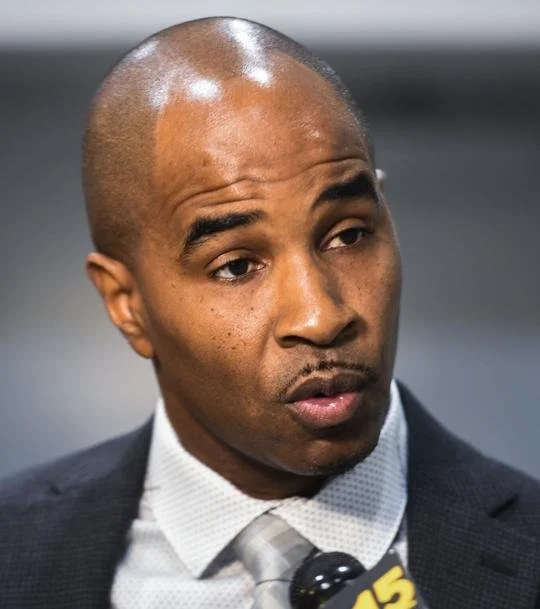
St. Landry Parish Schools Superintendent Milton Batiste III, pictured in May 2023 in Opelousas, La.
STAFF PHOTO BY BRAD KEMP
Batiste, who started as superintendent in 2023, explained that many of the positions are federally funded; others, including literacy coaches, were required by state law. He noted that the sprawling 900-square-mile district complicates school consolidation and requires a big transportation team. And he argued that some recently added positions, like assistant principals, are standard in most school systems.
“I've seen districts where you have an abundance of resources, an abundance of people,” he said, “and this is not one of them.”
But the district also did not close schools as enrollment plummeted, which drove up per-student spending. After parish voters soundly rejected a tax hike in 2022, the school board considered consolidating schools but took no immediate action.
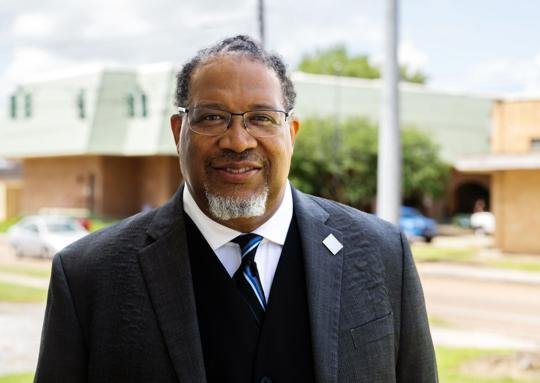
Rod Sias is pictured Monday, June 1, 2026, in Opelousas, La.
STAFF PHOTO BY LESLIE WESTBROOK
“There's been study after study after study saying that St. Landry Parish is operating too many schools,” said Rod Sias, a former Opelousas city official and local NAACP chapter president, at a district meeting in 2024. “Now, we're in a situation where if we do not do something extreme within three years, it's going to be unsustainable.”
Under Batiste’s leadership, the district moved to close three schools in 2025. In March, the board voted to merge an underenrolled middle school with a high school after state Superintendent Cade Brumley threatened to take over the F-rated junior high.
In an interview, Brumley praised Batiste’s “courageous decision” to downsize, saying districts can use the savings to pay teachers more.
“I just believe that school closure works,” he said. “It makes your system more efficient.”
The St. Landry Parish school system still faces a budget shortfall, and in May voters again refused to raise taxes to fund school employee raises and campus upgrades.
Sias, who tried to rally support for the ballot measure, now is helping launch a foundation to raise private money for the school system. He argues that, while the district must do its part to cut costs by consolidating more schools, the state and taxpayers must adequately fund the system — otherwise more families will choose other options.
“How do you reverse that?” he said. “You have to invest in your schools.”
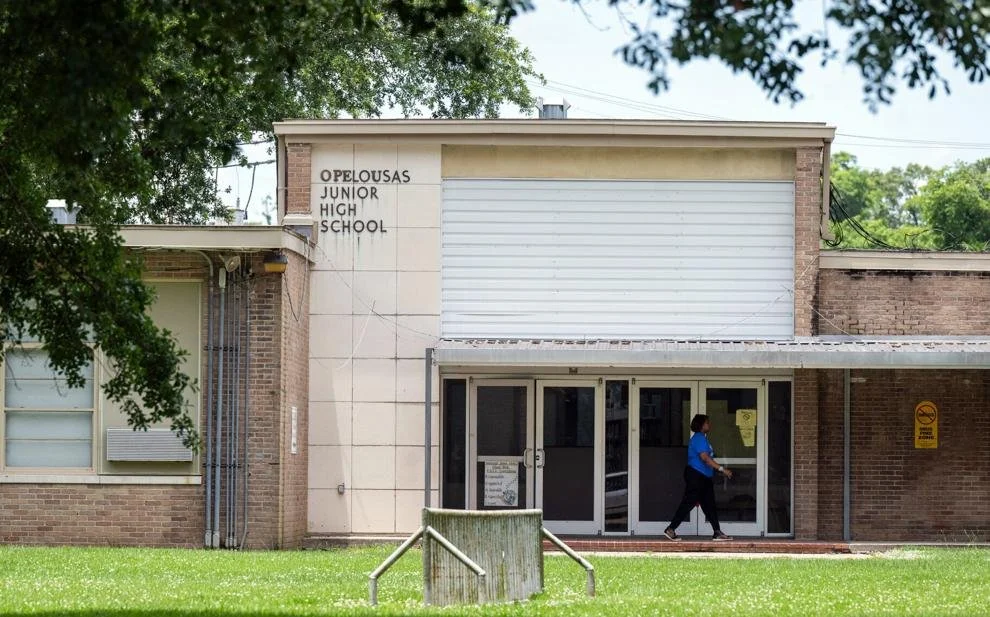
Opelousas Junior High School is pictured Monday, June 1, 2026, in Opelousas, La.
STAFF PHOTO BY LESLIE WESTBROOK